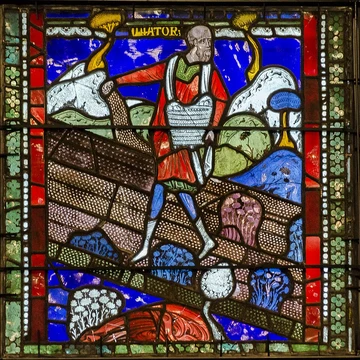
Medieval warfare
Medieval warfare transformed tactics, fortifications, and military organization.

Medieval warfare refers to the warfare of the Middle Ages, a period marked by technological, cultural, and social advancements that transformed military tactics from antiquity. The role of cavalry and artillery changed significantly, and the emergence of the castle in Europe, later spreading to the Holy Land, became a defining feature of fortification. Armies were organized around knights, light cavalry, and infantry, with recruitment varying from feudal obligations to mercenary forces.
- field
- Military history
- known_for
- Transformation of warfare from antiquity, emergence of castles, heavy cavalry dominance, siege warfare
Lore & Background
The medieval knight was typically a mounted and armoured soldier, often connected with nobility or royalty, though in north-eastern Europe knights could come from lower classes or even be enslaved persons. The high cost of armour, horses, and weapons helped transform the knight into a distinct social class. During the crusades, holy orders of knights fought in the Holy Land. Light cavalry, consisting of lighter armed men with lances, javelins, or missile weapons, was used as scouts, skirmishers, or outflankers, and included wealthy commoners or sergeants who could not afford knighthood.
Reader's Guide
Medieval warfare's significance lies in its adaptation to decentralized feudal systems and the rise of fortifications. The castle provided refuge for elites and protection against raiders, while siege warfare became a central aspect, with engines like trebuchets and mining techniques used to breach walls. The balance of power favored defenders until gunpowder weapons emerged. Recruitment evolved from feudal levies to paid professionals and mercenaries, notably in Italy where condottieri relied on manoeuvre and indirect warfare. This period laid groundwork for later military organization and tactics, influencing concepts of supply lines and economic warfare centuries before modern theorists.
Did You Know?
- Knights could come from lower classes or even be enslaved persons, especially in north-eastern Europe.
- Light cavalry included sergeants who had trained as knights but could not afford the costs.
- Mercenary-on-mercenary warfare in Italy led to relatively bloodless campaigns relying on manoeuvre.
- Fortifications were an excellent means of ensuring elites could not be easily dislodged from their lands.
More in Medieval Europe 1-24
Elsewhere in the Medieval Europe universe
Spotted an error? Know more?
This is a living reference — every entry is fact-audited, and reader corrections feed straight into our audit queue. Suggest an edit · See this site's audit record